
BLOG
IoT: The Shift from Devices to Infrastructure
MistyWest CEO Taylor Cooper opened the recent HardTech Forum panel discussion with a deceptively simple question: where’s your stuff?
The history of tracking technologies can be traced from early manual systems like telegraphs and tallying, to barcodes in the 1980s that enabled point-in-time visibility, and more recent advances in the 2010s like GPS and RFID.
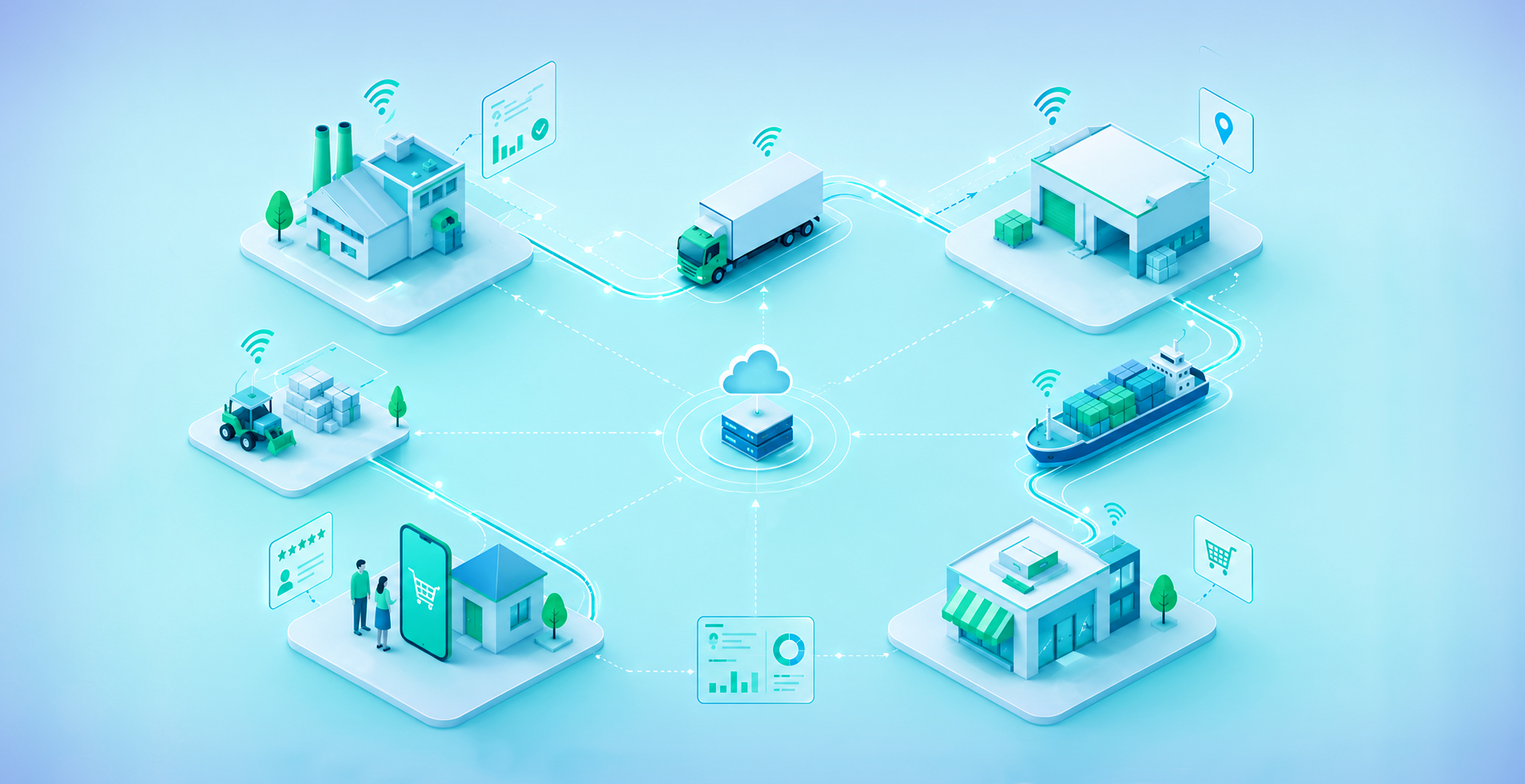
Now, we’re living in the age of printable smart shipping labels with embedded Bluetooth chips, continuous, real-time awareness powered by Direct-to-Cellular (DTC) communication, and new layers of connectivity. The hazy days of no visibility between barcode scans are in the distant past, and the focus is no longer just on better tracking—it’s on never losing visibility at all.
There are so many emerging technologies with the potential to transform logistics and supply chains. But what’s genuinely transformative, and what’s overhyped?
This HardTech Forum was dedicated to finding that out.
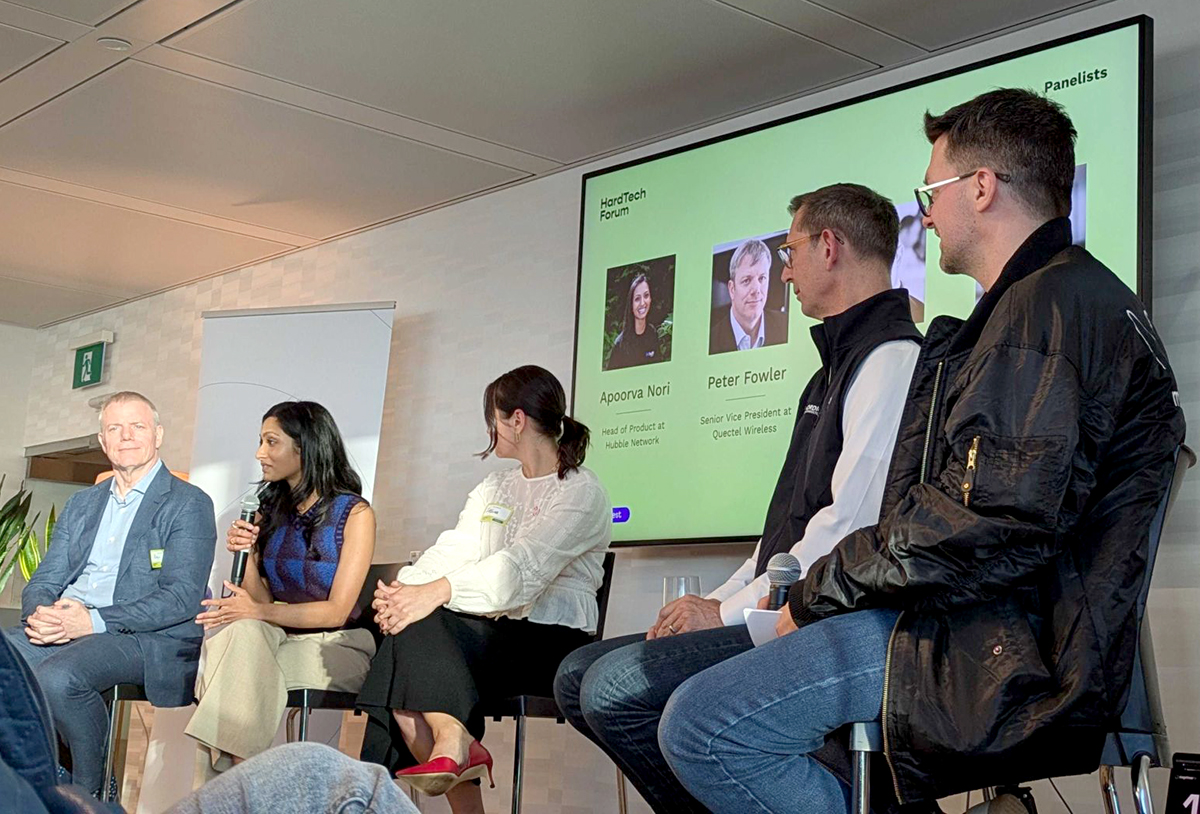
L to R: Peter Fowler, Apoorva Nori, Ivelina Daiss, Scott Odle and Taylor Cooper
MistyWest works with Seed to Series B startups and Fortune 1000 Innovation teams that are building novel products and need expertise and execution. Have a hard problem that needs solving? Tell us about it.
From “where in the world?” to continuous visibility
While the ubiquity of data on your phone makes it feel like we’re constantly connected, the truth is that only 15% of the Earth’s total surface has cellular coverage. Most Canadians have cellular access, yet actual coverage only spans 18% of Canada’s landmass.
For a country this size, that’s a major coverage gap for industries like resource extraction, transportation, and infrastructure, who operate in remote locations. But Satellite-to-Mobile (STM) connectivity—launched by Rogers Communications throughout Canada in late 2025—is bridging the gap and pushing the industry towards continuity of service.
Previously, IoT systems had to be designed with disconnection in mind—relying on offline modes, local storage, and delayed data syncing. “Seamless continuity between terrestrial and satellite means devices stay connected across geographies,” says Ivelina Daiss, Technology Innovation Specialist at Rogers. “This shifts IoT design away from fallback logic and toward simpler, more reliable systems.”
Direct-to-cell satellite connectivity transforms IoT from a fragmented, location-dependent model into a unified, always-on system, and IoT that’s designed for continuous telemetry places accountability and support directly on the carrier for remote, business-critical deployments.
Use cases as innocuous as waste management—where stolen bins can now be tracked and recovered, even outside cellular coverage—and large-scale remote deployments for things like pipeline monitoring and first responder support become much more viable once connectivity is assumed to be reliable everywhere.
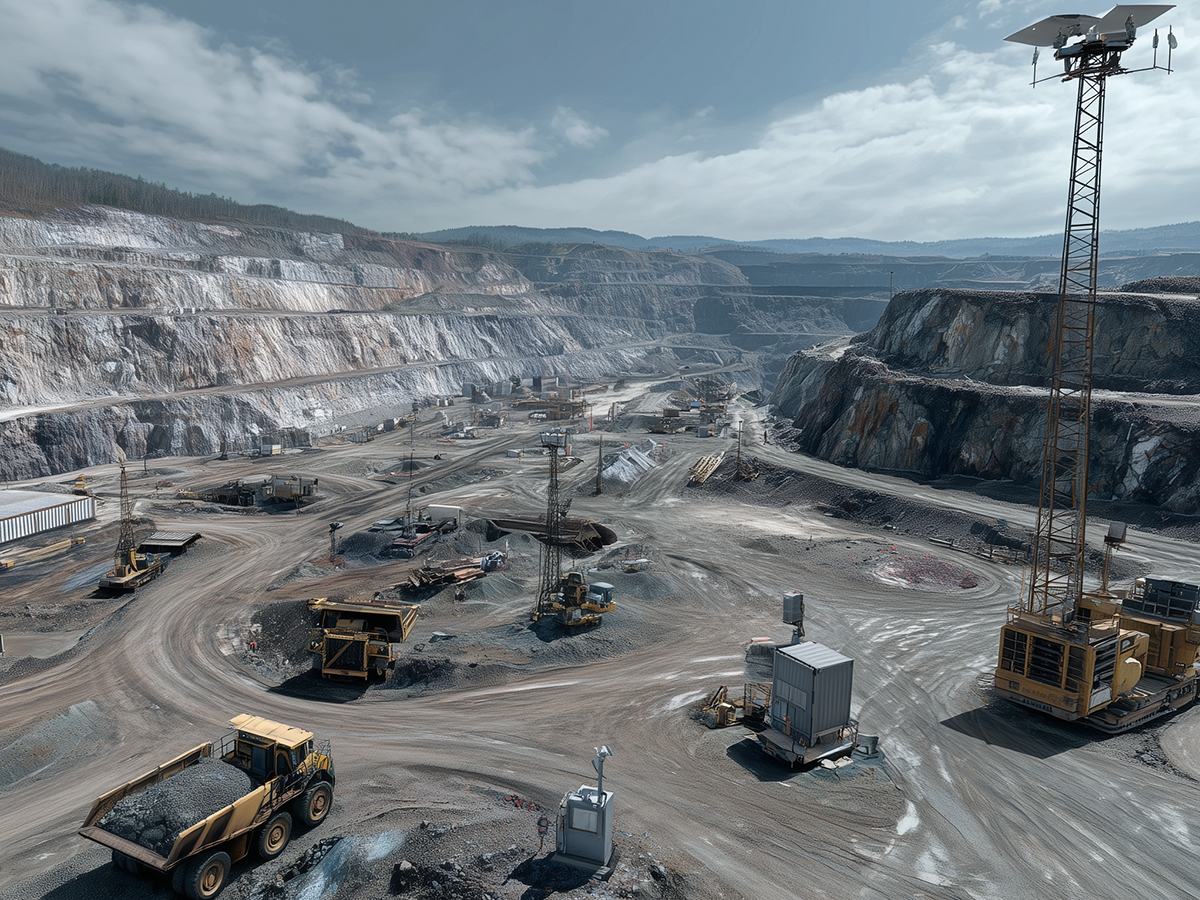
Mining companies operate in remote operations that require continuous satellite connectivity
Re-designing the network and not the hardware
What if the future of IoT and asset tracking is smarter infrastructure?
Hubble Network is on a mission to create the world’s first global, satellite-powered network for Bluetooth® LE devices, with no added cellular or satellite hardware. For the billions of already-deployed Bluetooth LE devices, that’s a pretty big deal.
“Bluetooth wireless technology is about as low-cost and power-efficient as it gets,” says Apoorva Nori, Head of Product at Hubble. “We’re building the world’s first global connectivity layer for those devices.”
Without changing the hardware, Hubble’s firmware protocol flips existing Bluetooth radios to ultra-low throughput but extremely long-range transmission, up to 500–600 km. Devices can send small packets of data (around 13 bytes) directly to satellites.
Hubble’s protocol works alongside traditional Bluetooth, enabling a hybrid model where devices use both short-range communication and long-range satellite transmission in parallel. The system is designed for simplicity, with devices sending one-way “chirps” to satellites, minimizing power use and hardware complexity while supporting sensor data, tracking, and SOS messaging.
Given that much of the world still lacks cellular coverage, shifting the complexity away from devices and into satellite-based antenna arrays and beamforming presents major opportunities for always-on connectivity. Real-time tracking of migratory birds that has evolved from delayed “store-and-forward” models to live monitoring, and senior care and healthcare devices that remove the need for complex setup, are a few of these use cases.

Bird migration tracking can now be done live, versus previous “store-and-forward” models
Most technologies fail commercially, not technically
While there was an energy of excitement around all these new developments, the panel was grounded by reality: most technologies don’t fail technically—they fail commercially.
“It’s easy to build products, but it’s not easy to sell them,” says Peter Fowler, Senior Vice President at Quectel Wireless. “History is full of promising wireless technologies that never scaled because the economics didn’t work.”
Companies like Ricochet—one of the first wireless Internet access services in the United States—and Sigfox were technically impressive. But outstanding performance aside, success depends on whether a technology can achieve enough adoption to support its deployment costs.
The bar has already been set by cellular: it’s widely available, relatively low-cost, and supported by mature infrastructure, making it difficult for new models to compete unless they offer clear advantages. But Fowler sees a meaningful shift happening now with the rise of newer satellite-based connectivity solutions (non-terrestrial networks, Starlink, Amazon Kuiper, Hubble), which are starting to become more cost-competitive.
In remote industries and sectors like mining and emergency services, the economics might already favor satellite connectivity before full cost parity. In order to continue bridging the network divide, the aforementioned providers above will need to achieve the subscriber scale needed to justify infrastructure investment—or risk becoming another overhyped wave.
Cellular connectivity has been ubiquitous for decades, but satellite is proving itself a contender
Software Is the new differentiator
As hardware becomes commoditized, the competitive edge is shifting decisively to software, integration, and speed. Nordic Semiconductor’s acquisition of Memfault in 2025 signals expansion into building out a full software ecosystem so companies can focus only on what makes their product unique.
“The strategy is to reduce burden,” says Scott Odle, Director of West Coast Sales Operations at Nordic. “You don’t need to waste your engineering resources on building out something that is not critical to differentiating your product.”
Integrated, ready-to-use software solutions like OTA updates, observability tools, or edge AI create a more complete, accessible ecosystem that accelerates development.
What does that mean for product owners? Faster time-to-market and more scalable products.

New technologies are opening worlds of new possibilities for coverage
Making the previously impossible… practical
The key takeaway of the discussion wasn’t the emergence of entirely new technologies, but the fact that previously impractical ideas are finally becoming viable at scale.
As intelligence moves out of the device and into the infrastructure, connectivity becomes abundant, affordable, and reliable. In places where coverage was once limited—or entirely nonexistent—better decision-making starts to take shape, whether that’s livestock monitoring or tracking golf carts.
In wildlife conservation, trackers as small as a grain of rice are now used to follow monarch butterfly migration—proof that lightweight, low-power connectivity can open entirely new scientific possibilities.
But the real magic isn’t in the novelty of the use case—it’s in the quiet removal of past constraints.
Want to be in the room for the next HardTech Forum? Sign up for the MistyWest Community newsletter to be first to hear about upcoming events.